Workplace Wellbeing: The Ultimate Guide for UK Businesses
Written by Tahira Hussain, BABCP-accredited Cognitive Behavioural Psychotherapist and Director of Goldmark Training. Last reviewed: July 2026.
Something has shifted in British working life over the past five years, and most organisations have felt it before they could name it.
Nearly a million UK workers are now living with stress, depression or anxiety they say was caused or made worse by their job. That is 964,000 people in the most recent Health and Safety Executive figures, and it is a record. Between them they accounted for 22.1 million lost working days in a single year, which is more than three fifths of all working days lost to work-related ill health in Great Britain. Absence has followed the same curve. The CIPD’s most recent Health and Wellbeing at Work survey put average sickness absence at 9.4 days per employee per year, up from 7.8 two years earlier and nearly two full working weeks per person.
Behind those numbers sit the pressures that shape a normal Tuesday morning in a UK organisation. Workloads that have not shrunk even as headcount has. Hybrid arrangements that solved the commute but quietly dismantled the informal support that used to happen at a desk or in a corridor. A cost of living squeeze that follows people into work. Line managers who are asked to spot the signs of poor mental health without ever being taught what those signs look like. And a generation of employees who no longer treat wellbeing as a perk they should feel grateful for, but as a basic condition of staying.
That last point is the one that changes the commercial calculation. Workplace wellbeing has stopped being an employee benefit and become a competitive advantage. Organisations that get it right recruit more easily, keep people longer, lose fewer days, and get more discretionary effort from the people they already employ. Deloitte’s research puts the average return at around £4.70 for every £1 invested in workforce mental health. Organisations that get it wrong pay for it anyway, just in absence, presenteeism, recruitment fees and reputation instead of in strategy.
I have spent nineteen years working across social work, mental health services, housing, community development and the charity sector, and the last decade of that delivering wellbeing training to organisations across the UK. This guide is what I would tell a client in a first conversation, written out in full. It covers what workplace wellbeing actually is, why it matters commercially as well as ethically, a seven pillar framework you can build a strategy around, what UK employers are legally responsible for, how to measure whether any of it is working, and the mistakes I see organisations make again and again.
It is long, because the topic deserves it. Use the contents below to jump to what you need.
Table of Contents
- What Is Workplace Wellbeing?
- Why Wellbeing in the Workplace Matters More Than Ever
- The Benefits of Workplace Wellbeing
- The 7 Pillars of Workplace Wellbeing
- Common Workplace Wellbeing Challenges
- How to Create a Workplace Wellbeing Strategy
- The Best Workplace Wellbeing Initiatives Compared
- Workplace Wellbeing Training
- UK Employer Responsibilities
- How to Measure Workplace Wellbeing
- Workplace Wellbeing Examples
- Mistakes Businesses Make
- Future Trends in Work Wellbeing
- Frequently Asked Questions
- Final Thoughts
What Is Workplace Wellbeing?
Workplace wellbeing is the combined physical, mental, emotional, financial, social and career health of the people in an organisation, and the extent to which the way that organisation is designed and led supports or undermines it.
That definition does a lot of work in one sentence, so it is worth unpacking the second half. Wellbeing is not simply a property of individual employees that an employer can top up with yoga. It is the product of an interaction between people and the conditions they work in. Two people with identical resilience will fare very differently under a manager who checks in and a manager who does not.
What Is Wellbeing at Work in Practical Terms?
If you strip away the language, wellbeing at work comes down to a set of everyday experiences. Can people do their job without their health suffering for it? Do they finish most weeks with something left in the tank? Do they feel able to say when they are struggling, and does anything happen when they do? Do they have enough control over how their work gets done? Are they treated fairly and paid enough to sleep at night?
When people ask me what is wellbeing at work, I usually answer with a test rather than a definition. Ask a random employee this question: if you were having a difficult month personally, would you tell your line manager? The answer tells you more about the state of wellbeing in your organisation than any policy document.
The World Health Organization frames health as complete physical, mental and social wellbeing rather than merely the absence of disease, and that framing translates neatly to work. A workplace with nobody signed off sick is not automatically a healthy workplace. It might simply be a workplace where people are afraid to be ill.
Wellbeing vs Wellness: Why the Difference Matters
These two words get used interchangeably and they should not be. The distinction is genuinely useful when you are deciding where to spend a budget.
| Wellness | Wellbeing | |
| Focus | Individual lifestyle and health behaviours | The whole experience of working here |
| Typical actions | Gym discounts, step challenges, fruit bowls, health screening | Workload design, manager capability, job control, fair pay, psychological safety |
| Where responsibility sits | Mostly with the employee | Shared between employer and employee |
| Timescale | Short campaigns and events | Ongoing, structural, cultural |
| Failure mode | Activity with no measurable change | Slower to build, harder to fake |
Wellness activities are not worthless. A running club genuinely helps some people. But wellness alone treats the symptom. If someone is anxious because their workload is undeliverable, a mindfulness app is not a solution, it is an insult with an interface. Wellbeing work asks the harder question of why the pressure exists in the first place.
The Six Dimensions of Well-being in the Workplace
Most credible models of well-being in the workplace break it into dimensions. Here is how I use them in training, with the questions each one should prompt.
Physical wellbeing. Energy, sleep, movement, ergonomics, recovery, and freedom from work-related physical harm. Does the way we work leave people physically depleted?
Mental wellbeing. Psychological health, stress load, cognitive demand, and access to support when things go wrong. Do people have the capacity and the help to manage what we ask of them?
Emotional wellbeing. The emotional labour of the role, how safe people feel expressing difficulty, and how the organisation handles distress. What are we asking people to absorb, and who holds them while they do it?
Financial wellbeing. Pay adequacy, financial confidence, pension understanding and freedom from money-related distress. Are our people worrying about money at their desks?
Social wellbeing. Belonging, connection, trust between colleagues, and inclusion. Would a new starter here find someone to talk to in week one?
Career wellbeing. Purpose, progression, skill growth and the sense that the job is going somewhere. Can people see a future here, and do they want it?
Suggested visual: The Six Dimensions of Workplace Wellbeing. A hexagonal infographic with each dimension, its core question, and two example interventions.
These six dimensions describe wellbeing. The seven pillars later in this guide describe what an organisation actually does about it, which is a different and more actionable question.
Why Wellbeing in the Workplace Matters More Than Ever
Wellbeing in the workplace has always mattered. What has changed is the cost of ignoring it and the visibility of the consequences.
The UK Numbers
These are the figures I would put in front of a board.
- 964,000 UK workers reported work-related stress, depression or anxiety in 2024/25, an all-time high, with 409,000 of those being new cases that year. (Health and Safety Executive)
- 1 million working days were lost to work-related stress, depression or anxiety, up around 35% on the previous year and equal to 62% of all working days lost to work-related ill health. (HSE)
- Stress, depression and anxiety now account for 52% of all work-related ill health in Great Britain. (HSE)
- Average sickness absence has reached 4 days per employee per year, up from 7.8 days in 2023 and around 5.8 days before the pandemic. (CIPD Health and Wellbeing at Work)
- Poor mental health costs UK employers an estimated £51 billion a year, of which roughly £24 billion is presenteeism, people at work but not able to perform. (Deloitte)
- 63% of employees report at least one characteristic of burnout, up from 51% four years earlier. (Deloitte)
- Every £1 invested in workforce mental health returns an average of £4.70. (Deloitte)
The HSE also identifies the main drivers people cite: workload and tight deadlines above all, followed by lack of managerial support, bullying and violence, and organisational change. That list is worth reading twice, because not one item on it is solved by a wellbeing app.
Burnout Is Now a Structural Problem, Not an Individual One
Burnout is not the same as being tired. In the occupational literature it has three components: exhaustion, mental distance or cynicism about the job, and reduced professional efficacy. It develops when high demand meets low control and low recovery, and it develops in patterns. When one person burns out, that is a personal crisis. When a team burns out in sequence, that is a design fault.
Public administration, education, and health and social care consistently show stress rates above the national average. These are sectors where the work is emotionally demanding, the caseloads have grown, and the resource has not. If you operate in one of them, benchmarking yourself against the all-industry average will flatter you.
Hybrid Working Solved One Problem and Created Another
Hybrid and remote work delivers real wellbeing gains: no commute, more autonomy, better fit around caring responsibilities. Those gains are genuine and employees will not give them up quietly.
What hybrid also removed was ambient observation. Managers used to notice things without trying. Someone quieter than usual, someone eating lunch alone, someone in at seven every morning. On video calls, everybody looks fine. The signals that used to arrive for free now have to be deliberately sought, and most managers have never been trained to seek them.
The second issue is boundary erosion. When the office is the spare room, the working day stops having edges. People answer messages at ten at night not because anyone asked them to, but because the laptop is right there and nobody ever said not to.
Employee Expectations Have Reset
The people entering and moving through the UK labour market now have a different baseline. They talk about mental health openly. They compare employers on Glassdoor before applying. They expect flexibility to be discussed, not begged for. And they are considerably less willing to trade their health for a job that would replace them within a fortnight.
Quiet quitting was a clumsy phrase for something real: the withdrawal of discretionary effort by people who have concluded the exchange is not fair. It is rarely laziness. It is usually a rational response to feeling unseen. The gap between what an employee gives and what they get back is where disengagement grows.
Retention, Recruitment and Employer Brand
Replacing an employee typically costs somewhere between six months and a year of their salary once you account for advertising, agency fees, management time, onboarding and the productivity dip while a new person learns the role. That figure rarely appears in a wellbeing business case, and it should.
Wellbeing has also become a recruitment signal. Candidates ask about it in interviews. Award schemes and accreditations get scrutinised. Reviews mention it. An organisation with a reputation for burning people out will pay a premium for talent, or will simply not get it. Wellbeing at work in the UK has quietly become part of the employer brand, whether or not an organisation chose to make it one.
The Benefits of Workplace Wellbeing
The case for investing in wellbeing at the workplace is not sentimental. It is one of the few interventions where the ethical argument and the financial argument point in exactly the same direction.
Benefits for Employees
Better mental health. Lower baseline stress, fewer anxiety symptoms, earlier intervention when things start to slip, and less chance of a difficulty becoming a crisis.
Improved work-life balance. Real boundaries, predictable hours, and the ability to be at the school play without a negotiation.
Reduced stress load. Manageable workloads, clearer roles and more control over how work gets done, which is consistently one of the strongest protective factors in occupational health research.
Higher motivation. People who feel supported bring more of themselves to the work. Engagement follows care, not the other way around.
Better physical health. Lower chronic stress improves sleep, immune function, blood pressure and long-term cardiovascular risk. The physical and the psychological are not separate systems.
Greater confidence. People who are not permanently depleted speak up more, contribute ideas and take on stretch.
Benefits for Employers
Higher productivity. Not because people work longer, but because rested, focused people make fewer errors and think more clearly.
Lower absenteeism. With mental ill health the leading cause of long-term absence in the UK, prevention has a direct effect on days lost.
Reduced presenteeism. The £24 billion problem. People physically present but functioning at a fraction of capacity, which is invisible on any absence report.
Better retention. Lower turnover, less lost institutional knowledge, less strain on the colleagues who stay.
Stronger engagement. Discretionary effort is given, never extracted.
Healthier culture. Psychological safety improves the quality of decisions, because problems surface while they are still small.
Lower recruitment costs. Fewer vacancies, shorter time to hire, less agency spend.
Better customer service. People who feel looked after treat customers better. In service sectors this is not a soft benefit, it is the product.
Reduced legal and reputational risk. Fewer grievances, fewer tribunal claims, less exposure under health and safety and equality legislation.
Suggested visual: Benefits comparison chart. Two facing columns, employee gains and employer gains, with the shared outcomes bridging the middle.
The honest caveat: none of this is instant. Absence data typically lags cultural change by six to twelve months. Anyone promising a measurable return in a quarter is selling you something.
The 7 Pillars of Workplace Wellbeing
Dimensions describe the problem. Pillars describe the work. This is the framework we use at Goldmark Training when we help an organisation build a wellbeing strategy, and it exists because so many wellbeing plans I have reviewed cover two or three areas thoroughly and leave the rest untouched.
Use it as an audit. Score yourself out of five on each pillar. The lowest score is where your next investment should go, not the pillar you already enjoy working on.
Suggested visual: The 7 Pillars of Workplace Wellbeing. Seven columns supporting a single horizontal beam labelled “sustainable performance”, each column with its pillar name and three practices.
Pillar 1: Mental Wellbeing
The foundation, and the one where amateur effort does the most damage.
- Stress management built into how work is planned, not offered as a workshop after the damage is done. Workload, deadlines and role clarity are stress interventions.
- Burnout prevention through monitoring the conditions that produce it: sustained overtime, high emotional demand, low autonomy, poor recovery between peaks.
- Access to counselling and therapeutic support, whether through an Employee Assistance Programme, a private provider, or clear signposting to NHS talking therapies.
- Employee Assistance Programmes that people actually know exist. Typical EAP utilisation sits in low single digits. If nobody uses it, you are buying reassurance, not support.
- Evidence-based skills. Cognitive behavioural techniques for recognising unhelpful thinking patterns and interrupting them work in the workplace for the same reason they work in the clinic. They are teachable, practical and they hold up under pressure.
Pillar 2: Physical Wellbeing
- Ergonomics for every workstation, including home ones. A DSE assessment that stops at the office door is incomplete.
- Movement designed into the day. Walking meetings, genuine breaks, and permission to leave the desk.
- Nutrition and hydration that make the healthy option the easy one rather than the virtuous one.
- Sleep and recovery, which means looking honestly at shift patterns, on-call arrangements and out-of-hours contact.
- Occupational health with fast, non-stigmatised referral routes.
Pillar 3: Financial Wellbeing
The pillar most UK employers underestimate, and the one that has moved fastest since the cost of living squeeze. Money worry is a powerful, sustained cognitive load. It sits in the background of every task.
- Pay transparency and clear, defensible progression criteria.
- Financial education delivered by someone independent, covering budgeting, debt and savings, with no product being sold at the end.
- Pension guidance that people can genuinely follow.
- Hardship and debt support, including salary advance schemes and signposting to free debt advice services.
Pillar 4: Social Wellbeing
- Inclusion is a wellbeing issue. People who feel othered at work carry a load their colleagues do not, and that load is exhausting. This is where equality, diversity and unconscious bias work meets wellbeing directly.
- Communication that is honest, timely and two-way, especially during change.
- Connection built deliberately for hybrid and dispersed teams rather than left to chance.
- Recognition that is specific, frequent and from people whose opinion matters to the recipient.
Pillar 5: Career Wellbeing
- Learning as a normal part of the job rather than a reward for good behaviour.
- Upskilling that keeps people employable, which paradoxically makes them more likely to stay.
- Progression with visible routes, including sideways ones for people who do not want to manage.
- Mentoring and coaching, particularly for people from backgrounds under-represented in your senior team.
Pillar 6: Leadership and Manager Wellbeing
If I could persuade UK organisations to change one thing, it would be this pillar. Line managers are the single biggest determinant of an individual’s day-to-day experience of work, and they are routinely the least supported group in the organisation.
- Manager capability. Managers need to know how to spot early signs of distress, open a conversation, hold it without panicking, and know where their responsibility ends. These are trainable skills. Nobody is born with them.
- Psychological safety. Teams where people can admit mistakes, ask questions and disagree without fear consistently outperform teams where they cannot. This is a leadership behaviour, not a poster.
- Feedback and trust. Regular, honest, two-directional.
- Support for managers themselves. Middle managers absorb pressure from above and distress from below and are frequently offered nothing. Supervision, peer groups and coaching are not luxuries at this level.
Pillar 7: Work-Life Balance
- Flexible and hybrid working as a genuine, well-designed option rather than a grudging concession.
- Flexible hours including compressed weeks, staggered starts and term-time arrangements.
- Leave policies that go beyond the statutory minimum where you can: bereavement, carers, fertility treatment, menopause, domestic abuse.
- The right to disconnect. Set a clear norm about out-of-hours contact and make senior people model it. If the chief executive emails at eleven at night, no policy will save you.
Common Workplace Wellbeing Challenges
Understanding what is going wrong is more useful than a list of things to install. These are the issues that come up most often in the sectors we work with.
Burnout in emotionally demanding roles. Care workers, housing officers, teachers, nurses and support staff carry other people’s distress as part of the job. Without structured decompression, that accumulates. This is compassion fatigue, and it is an occupational hazard, not a personal weakness.
Toxic or untrained management. Rarely malicious. Usually someone promoted for technical excellence and never taught to lead people. Ability to write good code or run a good ward does not transfer automatically to holding a difficult conversation about someone’s mental health.
Unmanageable workload. The most cited cause of work-related stress in the HSE data. No wellbeing initiative survives contact with a workload that cannot be delivered in the hours available.
Lack of recognition. People can tolerate a great deal of pressure if the effort is seen. What corrodes is invisibility.
Poor communication during change. Restructures, mergers and redundancy programmes are wellbeing events. Silence in the gaps gets filled with the worst available explanation.
Unresolved conflict. Two people who cannot work together destabilise an entire team. Managers avoid it because it is uncomfortable, and the cost compounds weekly.
Remote isolation. Working alone for extended periods, without incidental contact, is a genuine risk factor. It affects new starters and people living alone most sharply.
Financial stress. Employees taking second jobs, skipping meals, or dreading a specific date each month. It is not always visible, and it always affects performance.
Stalled careers. People who cannot see a future disengage before they resign. The resignation is the last step, not the first.
Stigma. In some workplaces, particularly male-dominated ones, admitting to struggling still feels professionally dangerous. Culture, not policy, decides this.
How to Create a Workplace Wellbeing Strategy
Encouragingly, 57% of UK organisations now report having a standalone wellbeing strategy, and 75% say wellbeing is on the senior leadership agenda, both up substantially since 2020. Less encouragingly, absence has risen throughout the same period. Having a strategy and having an effective strategy are different things.
Here is the sequence I would follow. Do not skip steps one and two, however tempting it is to jump straight to buying something.
Step 1: Assess What Is Actually Happening
Before you commit any budget, gather what you already have. Absence data broken down by team, department and reason. Turnover and exit interview themes. Grievance and conflict records. Occupational health referrals. EAP utilisation. Overtime patterns. Engagement survey results.
Look for concentration. If one department produces disproportionate absence, that is a management or workload issue in that department, and no organisation-wide initiative will touch it.
Step 2: Ask Your People Properly
Data tells you where. People tell you why.
Run a confidential wellbeing survey, and design it so the answers are usable. Ask about workload, control, manager support, recognition, clarity of role and change, which are the areas the HSE Management Standards are built around. Add free text. Then run small focus groups to interpret what the survey surfaced, ideally facilitated by someone outside the line management chain.
One firm rule: do not ask unless you intend to act. A survey followed by silence is worse than no survey. You have now formally demonstrated that speaking up changes nothing.
Step 3: Define Objectives You Could Fail
Vague ambitions produce vague activity. Turn findings into objectives with a number and a date.
Weak: improve staff wellbeing. Strong: reduce stress-related absence in the operations team by 20% within twelve months, and raise the proportion of staff who agree their manager supports their wellbeing from 54% to 70%.
Pick three to five. More than that and nothing gets proper attention.
Step 4: Secure Genuine Leadership Support
Not a signature on a policy. Genuine support means budget, a named executive sponsor, wellbeing on the leadership agenda as a standing item, and senior people visibly modelling the behaviours. A director who takes annual leave without checking email does more for your strategy than any campaign.
When building the business case, use the language finance uses: cost of absence days, cost of replacing a leaver, cost of presenteeism, and the £4.70 return figure from Deloitte’s research as a benchmark.
Step 5: Build the Action Plan Against All Seven Pillars
Map every proposed action to a pillar and check for gaps. Assign each an owner, a deadline, a budget and a success measure. Sequence it realistically over twelve to eighteen months. A plan that says “everything, this quarter” will deliver nothing by March.
Balance three types of action: preventive (workload design, manager training, job control), responsive (EAP, occupational health, return-to-work support), and cultural (recognition, psychological safety, inclusion). Most failing strategies are heavy on responsive and light on preventive, which means they are permanently treating consequences.
Step 6: Train Your Managers First
This is the step most often deferred and it should be first in the queue after the plan is written. Your policy is delivered by your line managers or it is not delivered at all.
Managers need to know how to recognise the early signs of stress and poor mental health, start a supportive conversation without needing a script, listen without trying to fix, understand what a reasonable adjustment is and when to involve HR or occupational health, and recognise where their role stops. That last point matters enormously. Untrained managers either avoid the conversation entirely or overreach into territory that belongs to a clinician. Both cause harm.
Step 7: Measure, Review and Adjust
Set your baseline before anything launches. Review quarterly against your objectives. Report progress back to staff, including the things that did not work, because that is what makes the next survey response honest.
Then change what is not working. A wellbeing strategy is not a document you complete. It is a cycle you run.
Suggested visual: The Wellbeing Strategy Roadmap. A seven stage horizontal timeline with owners, typical duration and outputs at each stage.
The Best Workplace Wellbeing Initiatives Compared
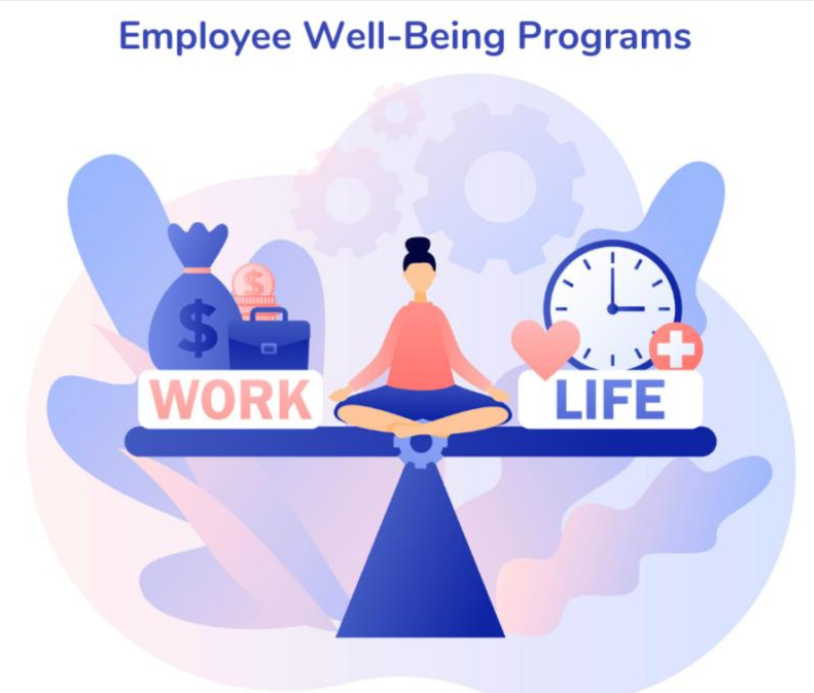
There is no universal best initiative. There is only the best next initiative for your organisation, given your size, sector, budget and what your data told you. This table reflects how these interventions tend to perform in practice across the UK organisations we work with.
| Initiative | Cost | Impact | Best suited to | Notes from practice |
| Manager mental health training | Medium | High | All businesses | The highest leverage intervention available to most employers |
| Mental Health First Aid | Medium | High | All businesses | Effective only where MHFAs are supported and their role is clearly bounded |
| Flexible and hybrid working | Low | High | Most roles | Needs designing, not just allowing |
| Employee recognition | Low | High | All businesses | Fails when it becomes a monthly formality |
| Workload and job design review | Low | Very high | All businesses | Uncomfortable, unglamorous, and the single biggest lever |
| Financial wellbeing education | Medium | High | All businesses | Use independent providers with no product to sell |
| Counselling and EAP access | Medium | High | Medium and large | Utilisation depends almost entirely on promotion and trust |
| Wellbeing workshops | Medium | High | All businesses | Impact depends on follow-through, not the day itself |
| Leadership coaching | High | Very high | Growing businesses | Changes the conditions rather than the coping |
| Resilience and stress management training | Medium | High | High-pressure sectors | Must sit alongside workload change, never instead of it |
| Mindfulness sessions | Low | Medium | All businesses | Genuinely useful, frequently oversold |
| Wellness challenges | Low | Medium | Medium and large | Engages the already healthy; watch the exclusion risk |
| Team volunteering | Low | Medium | All businesses | Strong for purpose and connection, weak for stress load |
| Occupational health referral pathway | Medium | High | All businesses | Value is in speed and lack of stigma |
If you can only fund one thing this year, fund manager capability. If you can fund two, add an honest look at workload.
Workplace Wellbeing Training
Most wellbeing budgets go on provision. Provision is passive: it sits there waiting for someone in difficulty to reach for it. Training changes what people do daily, which is where wellbeing is either protected or eroded.
The distinction matters because it explains a pattern I see repeatedly. An organisation buys a good EAP, promotes it twice, and absence does not move. The EAP was not the problem. The problem was that nothing changed in how work was assigned, how managers responded, or how safe it felt to speak up.
Here are the areas where training does the most work, and why.
Mental health awareness. Baseline understanding for all staff: what mental ill health is, what it is not, the common signs, and how to respond to a colleague without either minimising or panicking. This is where stigma is dismantled.
Manager and line management training. The highest return of anything on this list. Managers learn to recognise change in a team member, initiate a supportive conversation, listen properly, agree adjustments and know their limits.
Stress management. Identifying the sources and effects of stress, distinguishing pressure from harm, and applying practical techniques that work in real conditions rather than only in the training room.
Resilience. Not the version that means tolerating unreasonable treatment. Real resilience training builds the attitudes and habits that help people recover from setbacks and respond under pressure without depleting themselves.
Emotional intelligence. Self-awareness, regulation and empathy. These are the underlying capabilities that make every other people skill work.
Communication skills. A large proportion of workplace distress traces back to a conversation that went badly or never happened.
Conflict management. Giving managers the confidence to address issues early, while they are still small.
Equality, diversity and inclusion. Belonging is a wellbeing outcome. People who experience bias at work carry a chronic additional load, and unconscious bias training addresses one of the mechanisms that produces it.
Psychological safety. Building teams where people can speak up, admit error and ask for help. This shifts an organisation from a culture of compliance to a culture of honest dialogue.
Team building. Trust and connection, which matter more than ever for hybrid teams.
What Makes Wellbeing Training Work
Three things, in my experience.
Who delivers it. There is a real difference between awareness-level content and clinically grounded technique. Training built on cognitive behavioural principles gives people a working model of how thoughts, feelings and behaviour interact, plus specific tools to interrupt unhelpful patterns. That is transferable. General encouragement is not.
Whether it is tailored. A generic stress session lands differently in a housing team dealing with aggression at the door than in a finance team facing year end. The scenarios have to be recognisable or people disengage in the first ten minutes.
What happens afterwards. A single day changes awareness. Sustained change needs reinforcement: refreshers, manager follow-up, and visible alignment between what the training said and what the organisation does. If a course teaches people to set boundaries and their manager punishes them for it, the training has actively made things worse.
At Goldmark Training we deliver wellbeing training courses covering stress management, emotional resilience, mindfulness, psychological safety, bereavement and loss, depression awareness, guided self-help and CBT techniques, alongside leadership and management training, equality and diversity training and safeguarding training. Everything is tailored to the sector and the specific pressures a workforce is under, because the alternative does not survive contact with real work.
UK Employer Responsibilities
Wellbeing is not purely discretionary in the UK. Parts of it are a legal duty. This section is practical guidance rather than legal advice, and you should take proper advice on your specific circumstances.
Health and Safety at Work etc. Act 1974
Employers must ensure, so far as is reasonably practicable, the health, safety and welfare of employees at work. Health includes mental health. The HSE has been explicit that preventing work-related stress is a legal duty rather than a nice-to-have, and recent enforcement activity, including formal notices served on large employers over inadequate stress management arrangements, indicates a firmer posture.
Management of Health and Safety at Work Regulations 1999
These require suitable and sufficient assessment of the risks to employees’ health, which includes psychosocial risk. In plain terms: if you assess manual handling risk but never assess workload, role clarity, exposure to aggression or organisational change, your risk assessment is incomplete.
The HSE Management Standards give you a ready-made structure covering six areas: demands, control, support, relationships, role and change. They are free, well tested, and a reasonable way to evidence your approach.
Equality Act 2010
Mental health conditions can amount to a disability where the effect on day-to-day activities is substantial and long term. Where that applies, employers have a duty to make reasonable adjustments, which in practice might mean phased returns, adjusted hours, changed duties, quieter workspaces or altered targets. Employers also need to avoid discrimination arising from disability, which is where absence triggers applied without adjustment commonly cause problems.
Duty of Care
Beyond specific legislation sits a common law duty to take reasonable care for employees’ safety, including psychiatric injury where harm was reasonably foreseeable. Foreseeability is the key concept. If someone has told you they are struggling, or has been off with stress before, or has raised workload concerns in writing, you are on notice. Recorded, acted-upon responses are your protection.
Practical Compliance Checklist
- Include stress and psychosocial risk in your risk assessments, and review them after restructures or major change
- Keep a written stress policy that names who does what
- Train managers so they can recognise, respond and record consistently
- Run structured return-to-work conversations after every absence
- Document adjustments discussed, agreed, declined and reviewed
- Use occupational health early rather than as a last resort
- Keep health information confidential and handled in line with UK GDPR
- Review absence trigger policies so disability-related absence is treated appropriately
How to Measure Workplace Wellbeing
If you cannot measure it, you cannot defend the budget. Use a blend of lagging indicators, which tell you what has already happened, and leading indicators, which give you warning.
Lagging Indicators
Absence rate. Days lost per employee per year, split short and long term, with reasons recorded. Benchmark against the CIPD figure of 9.4 days and against your own sector.
Turnover. Overall, plus voluntary turnover, plus first-year leaver rate. Voluntary turnover concentrated in a single team is one of the loudest wellbeing signals available.
Return-to-work data. How long absences last and how many people relapse within six months.
Grievances, conflict cases and tribunal claims. Volume and theme.
Occupational health referrals. Number, reason and how quickly they happen after the first sign of difficulty.
Leading Indicators
Pulse surveys. Short, frequent, three to five questions, monthly or quarterly. Consistency of question wording matters more than sophistication.
Employee Net Promoter Score (eNPS). Would you recommend this as a place to work, scored zero to ten. Crude but trackable, and the free text comment is where the value sits.
A composite wellbeing score. Aggregate a small set of consistent survey items into a single index you can trend. Validated scales such as the Warwick-Edinburgh Mental Wellbeing Scale are useful if you want something research-grounded.
Manager support score. The proportion of employees who agree their manager supports their wellbeing. If I could track only one leading indicator, this would be it.
Support service utilisation. Low EAP use means low awareness or low trust, not low need.
Overtime and out-of-hours activity. Objective, already in your systems, and a reliable early warning of workload problems.
How to Read the Numbers
Segment everything. Organisation-wide averages hide the departments where the problem lives. Break data down by team, site, tenure and role level, and where you have the data and can do it safely, by protected characteristic. Wellbeing is very rarely evenly distributed.
Expect absence to lag. Culture change appears in survey data first, in turnover next, and in absence data last. Give a strategy at least twelve months before judging it on absence alone.
Suggested visual: Workplace Wellbeing Maturity Model. Five levels from Reactive to Embedded, with the characteristic behaviours and metrics at each level so readers can locate themselves.
Workplace Wellbeing Examples
The examples below are composites, drawn from patterns we see repeatedly across sectors and anonymised. They illustrate typical problems and realistic responses rather than describing specific named clients.

Healthcare and Social Care
The problem. A community care provider with high sickness absence concentrated in frontline care staff. Exit interviews cited emotional exhaustion rather than pay. Staff were absorbing distress, bereavement and occasional aggression with no structured outlet, and supervision had quietly become a caseload check.
The response. Reflective practice sessions were built into the rota, so decompression became part of the job rather than something people did in the car park afterwards. Team leaders were trained in supportive conversations and in recognising compassion fatigue. Bereavement and loss training was delivered to everyone in a client-facing role.
The outcome. The realistic pattern here is a reduction in short-term absence within two to three quarters, and a measurable improvement in whether staff say they feel supported. Turnover is the slowest metric to shift and typically follows in year two.
Construction
The problem. A contractor with a workforce that would discuss physical safety readily and mental health never. Suicide risk in construction is a well-documented national concern. The barrier was cultural, not informational.
The response. Mental health conversations were introduced through the existing safety briefing structure, because that was the format the workforce already trusted. Site supervisors were trained first, since a foreman’s attitude sets the site norm. Financial wellbeing support was added after a survey revealed money worry was the dominant stressor for subcontracted staff.
The outcome. The measurable early indicator is not absence, it is disclosure. More people using the support route is a success signal, not a failure signal.
Office and Professional Services
The problem. A professional services firm with low absence, high presenteeism and an always-on culture. People were working while unwell and while on annual leave. Quality issues were rising and nobody could explain why.
The response. Out-of-hours contact norms were set and, critically, modelled by partners. Workload allocation was made visible so overload could be spotted before it became a crisis. Resilience and stress management training was delivered alongside those structural changes, never as a substitute for them.
The outcome. Absence often rises slightly at first, which alarms people. It usually means staff have started taking sick leave when they are genuinely ill instead of working through it. That is a healthy correction.
Manufacturing
The problem. Shift patterns disrupting sleep, an ageing workforce with musculoskeletal issues, and supervisors promoted for technical skill with no people management training.
The response. Shift rotation was reviewed against fatigue evidence. Supervisor training covered the basics of supportive conversations and early intervention. Physical and mental health were treated as a single agenda, because for this workforce they genuinely were.
The outcome. Fatigue-related errors and near misses tend to respond fastest and are worth tracking as a wellbeing metric in their own right.
Education
The problem. A multi-academy trust with staff reporting workload as unmanageable and stress-related absence concentrated in the autumn and spring terms.
The response. A workload reduction group with genuine authority to remove tasks rather than only discuss them. Middle leaders were given coaching and supervision, having previously received neither. Wellbeing was moved onto the trust board agenda as a standing item with reported metrics.
The outcome. In education, the credibility test is whether anything visibly gets removed from the workload. Wellbeing initiatives added on top of an unchanged workload are read, correctly, as more work.
Mistakes Businesses Make
Treating wellbeing as an event. A wellbeing week in May, then nothing until the following May. Awareness days are fine as a component and useless as a strategy.
Ignoring managers. Investing in employee-facing provision while leaving the people who shape daily experience untrained and unsupported.
Buying benefits instead of changing conditions. An app cannot fix a workload. It can, however, communicate very clearly that the organisation would rather buy something than change something.
Not measuring anything. No baseline, no metrics, no review. Then the budget gets cut in the next cost round because nobody can demonstrate value.
Asking without acting. The survey that disappears. Each unanswered survey makes the next one less honest and the underlying problem less visible.
Excluding employees from the design. Wellbeing programmes designed by people whose working conditions are nothing like those of the staff they are designed for. A gym membership lands very differently with someone working twelve-hour shifts.
Poor communication. Good provision that nobody knows about. If people cannot name your support routes, you do not have support routes, you have a contract.
Tokenism. Fruit bowls and pizza for a team that has been under-resourced for a year. Employees are not fooled, and the gesture reads as contempt.
Only supporting people in crisis. Reactive support is essential. Prevention is cheaper, kinder and where the real gains sit.
Confusing engagement with wellbeing. Highly engaged people burn out too, and often first, because they keep giving.
Future Trends in Work Wellbeing
AI as an amplifier of both risk and support. AI is beginning to appear in wellbeing tools, from analytics that flag teams at risk through overtime and communication patterns, to chat-based support. Used well, it surfaces problems earlier. Used badly, it becomes surveillance dressed as care. The governance question, who sees what and on what basis, will matter more than the technology itself.
AI is also reshaping the work, which creates its own wellbeing challenge: job security anxiety, the pressure of continual reskilling, and identity questions for people whose expertise is being partly automated. Expect this to become a mainstream wellbeing conversation over the next two years.
Digital wellbeing. Meeting load, notification pressure and the cognitive cost of constant context switching are now recognised occupational stressors. More organisations are setting focus time, meeting-free periods and out-of-hours norms as policy rather than preference.
Hybrid working matures. The argument about whether hybrid is allowed is largely over. The work now is designing it properly: intentional office days, deliberate connection, and management approaches built for distributed teams rather than inherited from co-located ones.
Shorter working weeks. UK four-day week pilots have produced consistent wellbeing results, with 71% of participants in the largest trial reporting reduced burnout and 92% of participating companies continuing afterwards. A further UK pilot saw all seventeen participating businesses keep the arrangement. It will not suit every operating model, particularly where cover must be continuous, but it is no longer a fringe idea.
Personalisation. One-size provision is giving way to choice. A 24-year-old renting, a 45-year-old with caring responsibilities in both directions, and a 60-year-old planning retirement need genuinely different things.
Financial wellbeing becomes standard. Sustained cost pressure has moved this from a fringe benefit to an expectation.
Preventive mental health. A shift from treating crisis to designing conditions that reduce it, driven by both evidence and cost.
Neurodiversity support. Growing recognition that traditional workplace design, from open-plan noise to unstructured interviews, disadvantages neurodivergent employees. Adjustments here are usually low cost and disproportionately effective.
Life-stage support. Menopause, fertility treatment, caring responsibilities and bereavement are increasingly expected as part of a credible offer rather than treated as niche.
Managers as the focus of investment. The clearest direction of travel. Organisations are recognising that manager capability is the mechanism through which every other wellbeing intervention either works or fails.
Frequently Asked Questions
What is workplace wellbeing?
Workplace wellbeing is the physical, mental, emotional, financial, social and career health of employees, and the degree to which the way an organisation works supports it. It covers both individual health and the structural conditions that shape it, including workload, management quality, job control and culture.
Why is workplace wellbeing important?
Because the cost of neglecting it is measurable and large. Poor mental health costs UK employers an estimated £51 billion a year, 22.1 million working days were lost to work-related stress, depression and anxiety in 2024/25, and average absence has reached 9.4 days per employee. Beyond cost, employers have legal duties around health, risk assessment and reasonable adjustments.
What is the difference between wellbeing and wellness?
Wellness usually refers to individual health behaviours such as exercise, nutrition and sleep. Wellbeing is broader and includes the conditions of the job itself: workload, autonomy, fairness, management support and psychological safety. Wellness activities help people cope. Wellbeing work changes what they have to cope with.
How do employers improve wellbeing in the workplace?
Start by assessing your data and asking employees directly. Set measurable objectives, secure real leadership backing, then act across all seven pillars rather than only the easy ones. Train managers early, because they deliver most of it. Measure, review and adjust rather than launching and hoping.
What are workplace wellbeing programmes?
A structured set of policies, provision and training designed to protect and improve employee health. A credible programme typically includes mental health support and access to counselling, manager training, flexible working, financial wellbeing support, physical health provision, recognition, and clear policies on stress, absence and adjustments.
How do you measure workplace wellbeing?
Use lagging indicators such as absence, turnover, grievances and occupational health referrals alongside leading indicators such as pulse surveys, eNPS, a composite wellbeing score, manager support ratings, support service utilisation and overtime patterns. Segment by team, and expect absence data to lag cultural change by six to twelve months.
Is workplace wellbeing a legal requirement in the UK?
Parts of it are. Under the Health and Safety at Work etc. Act 1974 employers must protect employees’ health, which includes mental health, and the Management of Health and Safety at Work Regulations 1999 require assessment of risks including psychosocial risk. Under the Equality Act 2010, reasonable adjustments must be made where a mental health condition amounts to a disability. Employers also owe a common law duty of care. Specific initiatives are discretionary; managing the risk is not. Take proper legal advice on your own circumstances.
What training improves workplace wellbeing?
The highest-impact training is for line managers: recognising early signs of distress, holding supportive conversations, agreeing adjustments and knowing the limits of their role. Alongside that, mental health awareness for all staff, stress management, emotional resilience, communication, conflict management, emotional intelligence, psychological safety, and equality and diversity training all contribute.
How often should wellbeing surveys be conducted?
A comprehensive survey annually, supported by short pulse surveys monthly or quarterly. Frequency matters less than consistency of questions and, above all, visible action afterwards. Surveying more often than you can respond to damages trust.
What role do managers play in employee wellbeing?
The largest single role. Managers control workload allocation, recognition, flexibility, and whether it feels safe to disclose a difficulty. An employee’s relationship with their line manager is consistently one of the strongest predictors of their experience at work, which is why manager training is the highest-return investment available to most employers.
What causes poor wellbeing at work?
The HSE identifies workload and tight deadlines as the leading cause of work-related stress, followed by lack of managerial support, bullying and violence, and organisational change. Add financial pressure, isolation in remote roles, unresolved conflict, lack of recognition and stalled career progression.
How much does workplace wellbeing cost?
It varies enormously. Some of the highest-impact actions, such as reviewing workload allocation, setting out-of-hours norms and improving recognition, cost almost nothing. Training and provision carry real costs, but Deloitte’s research suggests an average return of about £4.70 for every £1 spent on workforce mental health.
Can small businesses run a wellbeing programme?
Yes, and smaller organisations have real advantages: shorter lines of communication, closer relationships and faster decisions. Focus on the fundamentals. Train whoever manages people, keep workloads honest, offer flexibility where the work allows, and know where to signpost. You do not need a large budget to run a good wellbeing culture.
How long before wellbeing initiatives show results?
Survey measures such as perceived manager support can move within one or two quarters. Turnover typically responds over twelve to eighteen months. Absence is the slowest, and often rises briefly first as people stop working through illness. Judge a strategy over a year, not a quarter.
What is presenteeism and why does it matter?
Presenteeism is attending work while unwell and performing below capacity. It is the single largest component of the cost of poor mental health to UK employers, at roughly £24 billion a year, and it is invisible on absence reports. Organisations with very low absence and no wellbeing strategy often have a presenteeism problem rather than a healthy workforce.
Who should own workplace wellbeing in an organisation?
Accountability should sit with a named senior leader, with day-to-day coordination usually in HR or a wellbeing lead role. But delivery sits with line managers, and responsibility is genuinely shared. Wellbeing owned solely by HR tends to stall, because HR does not control workload, deadlines or team culture.
Final Thoughts
If there is one idea worth carrying out of this guide, it is that workplace wellbeing is a set of decisions rather than a set of activities.
The decisions are about how much work you allocate and to whom. Who you promote into management and what you teach them before they get there. Whether people can tell the truth about how they are doing without it counting against them. Whether the person at the top answers emails at midnight. Whether, when your survey tells you something uncomfortable, anything actually changes.
The organisations that do this well are rarely the ones with the most impressive benefits list. They are the ones where a struggling employee gets a decent conversation with a manager who knows what to do, early enough for it to matter. That is not a programme. It is a capability, and capabilities are built through training, reinforcement and leadership that models what it asks of everyone else.
The UK data is unambiguous. Work-related stress, depression and anxiety are at record levels, absence is at its highest in over a decade, and psychological ill health is now the leading cause of long-term absence. Doing nothing is not a neutral position. It has a price, and it is being paid already.
Start where your data points. Ask your people properly and act on what they tell you. Train your managers before anything else. Measure honestly, including the parts that do not work. And treat this as an ongoing organisational strategy rather than a campaign with an end date, because the pressures it responds to are not going anywhere.
If you are working out where to begin, or you have a wellbeing strategy that has stalled, we are always happy to talk it through. Goldmark Training delivers wellbeing training and leadership and management training to housing associations, local authorities, charities, health and care providers, education and private sector organisations across the UK, tailored to the pressures your workforce is actually under. You can book a chat or call 07476 988566.
About the Author
Tahira Hussain is the founder and director of Goldmark Training. She is a qualified Cognitive Behavioural Psychotherapist registered with the BABCP and the British Psychological Society, and an approved therapist supporting employee wellbeing through training and CBT-based therapies.
Tahira brings nineteen years of experience across social work, mental health, housing, community development and the charity sector. She designs and delivers Goldmark Training’s wellbeing, leadership, equality and diversity, and safeguarding programmes for organisations across the UK, and her clinical background means participants receive evidence-based technique rather than awareness-level content.
She is a TEDx speaker, having delivered “I’m Not Racist But…” at TEDx Northwich, hosts the Tara Talks podcast, and writes the Diary of a Psychotherapist blog.
Sources and Further Reading
- Health and Safety Executive, Work-related stress, depression or anxiety statistics in Great Britain, 2025 and Health and Safety at Work: Summary Statistics for Great Britain 2025 (published November 2025)
- Health and Safety Executive, Management Standards for work-related stress
- CIPD and Simplyhealth, Health and Wellbeing at Work Report 2025
- Deloitte, Mental Health and Employers: The Case for Investment (2024)
- Autonomy, University of Cambridge and Boston College, UK Four Day Week Pilot Results, and 4 Day Week Foundation 2025 pilot findings
- Mind, Mental Health at Work resources
- NHS, Every Mind Matters
- Health and Safety at Work etc. Act 1974; Management of Health and Safety at Work Regulations 1999; Equality Act 2010
This guide provides general information and practical guidance. It is not legal advice. Employers should take professional advice on their specific obligations.
