
Safeguarding Adults: The Complete UK Guide to Protecting Adults at Risk
Written by Tahira Hussain, Director of Goldmark Training, BABCP-accredited Cognitive Behavioural Psychotherapist and safeguarding trainer. Last reviewed: July 2026.
If you are worried about someone right now: contact the adult social care team at the local council where the person lives and ask to raise a safeguarding concern. If someone is in immediate danger or a crime is taking place, call 999. You do not need to be certain, and you do not need proof. Reporting a concern is not an accusation.
In the most recent year for which national figures exist, English councils received 640,240 safeguarding concerns about adults. That is the eighth consecutive annual rise. Of those, 185,270 became formal enquiries under section 42 of the Care Act 2014, involving 148,830 people.
Behind every one of those numbers is a moment where somebody noticed something and said so. A district nurse who saw a pressure sore that should never have developed. A housing officer who realised the same nephew was in the flat every pension day. A care worker who noticed a colleague speaking to residents in a way that made her uneasy, and who decided that raising it mattered more than being liked.
Those moments are what safeguarding actually is. Not the policy on the shared drive, and not the annual e-learning module. The willingness of an individual to notice, and then to act.
The evidence is that most abuse is not discovered by an inspection. It is discovered by someone in the room. In 2024-25, the source of risk in concluded enquiries was someone known to the adult in 57.3% of cases and a service provider in 34.1%. The most common location was the person’s own home. Abuse of adults at risk is overwhelmingly close, domestic and quiet, which is precisely why trained, confident staff matter more than any process.
This guide is written for care workers, nurses, housing officers, social workers, managers, volunteers, teachers, trustees and anyone whose role brings them into contact with adults who may be at risk. It covers what safeguarding adults means, who counts as an adult at risk, the legal framework under the Care Act 2014, the six principles, the ten categories of abuse and their warning signs, how to report a concern properly, what happens next, and how mental capacity affects every decision along the way.
I have spent nineteen years working across social work, mental health, housing, community development and the charity sector, and I have delivered safeguarding training to housing associations, local authorities, care providers, charities and education settings throughout that time. I have also sat on the other side of the table, as a trustee of a women’s aid organisation for eight years. What follows is what I teach, written out in full.
Table of Contents
- What Is Safeguarding Adults?
- Who Is Considered an Adult at Risk?
- Why Is Safeguarding Adults Important?
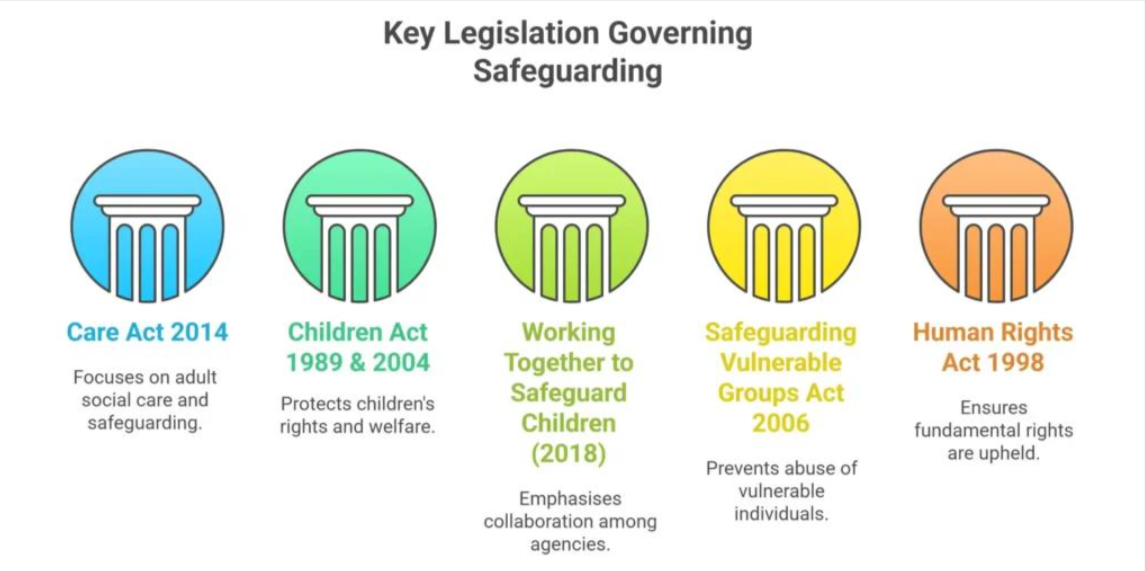
- The Care Act 2014 and Adult Safeguarding
- The Six Principles of Safeguarding Adults
- Types of Abuse in Adult Safeguarding
- Signs and Indicators of Abuse in Adults
- Who Has Safeguarding Responsibilities?
- How to Report a Safeguarding Concern
- What Happens During a Safeguarding Enquiry?
- Mental Capacity and Safeguarding
- Record Keeping in Adult Safeguarding
- Best Practices for Safeguarding Adults
- Safeguarding Adults in Different Settings
- Common Challenges in Adult Safeguarding
- Safeguarding Adults Training
- Frequently Asked Questions
- Conclusion
What Is Safeguarding Adults?
Definition: Safeguarding adults means protecting an adult’s right to live in safety, free from abuse and neglect. It involves working with the person, and with other agencies, to prevent abuse and neglect wherever possible, and to respond appropriately when it does occur, while always taking account of the adult’s own views, wishes, feelings and beliefs.
That definition comes from the Care and Support Statutory Guidance which accompanies the Care Act 2014, and it is worth reading twice because of what it puts at the centre. Not the process. The person.
What Is Adult Safeguarding Under the Care Act 2014?
Before 2014, adult safeguarding in England operated largely on policy and goodwill. The Care Act put it on a statutory footing for the first time.
Section 42 of the Act sets out the trigger for a local authority’s duty. Where a council has reasonable cause to suspect that an adult in its area:
- (a) has needs for care and support, whether or not the authority is meeting any of those needs, and
- (b) is experiencing, or is at risk of, abuse or neglect, and
- (c) as a result of those needs is unable to protect themselves against the abuse or neglect or the risk of it
then the council must make, or cause to be made, whatever enquiries it thinks necessary to decide whether any action should be taken and, if so, what and by whom.
All three limbs must be present. This is the single most misunderstood point in adult safeguarding, and I will return to it when we look at who counts as an adult at risk.
Safeguarding Adults Meaning in Everyday Practice
Statutory language is precise and, for most frontline staff, not much use at half past four on a Friday. So here is what safeguarding adults means in practice.
It means noticing when something is not right. It means having the confidence to ask a question rather than explaining the observation away. It means recording what you saw in plain, factual language. It means passing the concern to someone who can act on it, on the same day, rather than waiting to see whether it happens again. And it means keeping the person at the centre of what happens next, because an adult who has been harmed and then has all control taken away from them in the name of protection has often been harmed twice.
When people ask me what safeguarding adults means, I give them a test rather than a definition: if you were wrong about this, would you rather have raised it or not raised it? Almost always, the answer is that you would rather have raised it. Safeguarding is not the art of being certain. It is the discipline of passing on what you have noticed.
Safeguarding Adults Compared With Safeguarding Children
Safeguarding for adults and safeguarding for children share a purpose but operate on genuinely different logic, and staff who move between the two get caught out by this.
| Safeguarding children | Safeguarding adults | |
| Primary legislation | Children Act 1989 and 2004, Working Together to Safeguard Children | Care Act 2014, Care and Support Statutory Guidance |
| Consent to refer | The child’s consent is not required; the child’s welfare is paramount | The adult’s consent is normally required unless specific exceptions apply |
| Capacity | Presumed to develop with age; Gillick competence applies | Capacity is presumed from 16 or 18 and must be assessed, not assumed |
| Core principle | Paramountcy of the child’s welfare | Empowerment and Making Safeguarding Personal |
| Who is covered | All children, universally | Only adults meeting the three section 42 criteria |
| Right to make unwise decisions | Limited | Explicitly protected under the Mental Capacity Act 2005 |
The consent difference is the one that causes most anxiety. With a child, you refer. With an adult who has capacity, you normally need their agreement, and if they decline you have to work with that, unless one of the recognised exceptions applies. Those exceptions matter and are covered later in this guide.
Why Safeguarding of Adults Exists
The safeguarding of adults exists because certain circumstances make people less able to protect themselves, and because those same circumstances often reduce the chance that anyone will notice.
An older woman with dementia cannot reliably report that money is missing. A man with a learning disability may not recognise that what is happening to him is abuse, or may have been taught throughout his life to comply with people in authority. Someone dependent on a carer for washing, food and medication has a great deal to lose by complaining about that carer. Isolation, dependence and communication difficulty are not incidental features of abuse cases. They are frequently the reason the abuse was possible.
Safeguarding exists to close that gap. It puts a duty on organisations and a responsibility on individuals to look, and to speak.
Who Is Considered an Adult at Risk?
The term “vulnerable adult” is still widely used, and you will see it in older documents and in the title of some safeguarding vulnerable adults policies. Current practice prefers adult at risk, for a good reason: vulnerability is not a permanent personal characteristic. It describes a situation someone is in, often temporarily, and the older term encouraged staff to see whole categories of people as inherently helpless.
An adult at risk is someone aged 18 or over who meets the three section 42 criteria: they have care and support needs, they are experiencing or at risk of abuse or neglect, and because of those needs they cannot protect themselves.
Groups Most Commonly Affected
Older adults, particularly those with frailty, dementia or reduced mobility, and especially those who are isolated.
Adults with a physical or sensory disability, where dependence on others for personal care creates opportunity for harm and difficulty in reporting it.
Adults with a learning disability. Consistently over-represented in safeguarding data. Compliance with authority, difficulty recognising exploitation and communication barriers all contribute.
Adults with mental health conditions, where symptoms may be used to discredit disclosures, and where periods of crisis reduce the ability to self-protect.
Adults with a long-term illness or terminal diagnosis, where fatigue, pain and treatment burden reduce capacity to manage finances or challenge poor care.
Adults with substance dependence, who are at high risk of exploitation, including cuckooing, where a person’s home is taken over for drug dealing.
Adults receiving any form of care, whether at home, in supported living or in a residential setting.
Adults experiencing domestic abuse, including older people abused by adult children or grandchildren, which is significantly under-recognised.
Adults who are homeless or in insecure housing, who face compounded risk and often fall between services.
Temporary Vulnerability Matters Too
This is where organisations most often get it wrong. Care and support needs do not have to be long term or diagnosed.
A woman recovering from major surgery who cannot leave her flat for six weeks may meet the criteria during that period. A man in acute grief following a bereavement may be temporarily unable to manage his finances or resist pressure. Someone newly discharged from hospital, disorientated and dependent on visiting carers, may be at risk for a fortnight and then not at all.
Two Common Mistakes
Assuming a diagnosis is required. It is not. The test is care and support needs, not a label on a file. Someone with no social care involvement whatsoever can be an adult at risk.
Assuming capacity means safety. An adult can have full mental capacity and still be unable to protect themselves, particularly where they are coerced, physically dependent, or frightened. Coercive control does not remove capacity, but it very effectively removes freedom.
If you are unsure whether someone meets the criteria, that decision is not yours to make. Raise the concern and let the local authority determine it. Deciding for yourself that a threshold is not met is one of the most common failures identified in Safeguarding Adults Reviews.
Why Is Safeguarding Adults Important?
The Scale in the UK
The most recent national figures for England, published by the Department of Health and Social Care for 2024-25, set out the picture clearly.
- 640,240 safeguarding concerns were raised with councils, a 4% increase and the eighth consecutive annual rise.
- 185,270 section 42 enquiries commenced, up 4.9% on the previous year, involving 148,830 individuals.
- 178,135 section 42 enquiries concluded during the year.
- Neglect and acts of omission remained the most commonly recorded type of harm, appearing in 72,660 concluded enquiries, followed by physical abuse (41,675), financial abuse (33,130), psychological abuse (29,265) and self-neglect (23,000).
- Self-neglect rose by 24.3% year on year, the sharpest increase among the most common categories.
- The source of risk was someone known to the adult in 57.3% of concluded enquiries, and a service provider in 34.1%.
- Risk was identified in around 80% of concluded enquiries. Where risk was identified, it was removed in roughly two thirds of cases and reduced in a further quarter.
Two things stand out. First, the rise is sustained, not a blip. Second, and more useful for training purposes, the harm is overwhelmingly close to home. It comes from family members, partners, neighbours and paid carers, in the adult’s own home, which is exactly where scrutiny is thinnest.
Why It Matters Beyond the Numbers
Dignity. Abuse strips people of the sense that they matter. Restoring that is as much a part of safeguarding as removing the immediate risk.
Prevention. Most serious harm has a history. Safeguarding Adults Reviews repeatedly find earlier concerns that were noticed by someone and never passed on. Early action is cheaper, kinder and more effective than late action.
Independence. Good safeguarding increases a person’s freedom rather than restricting it. Poor safeguarding removes choice in order to reduce risk, which is protection at the cost of the life being protected.
Human rights. The Human Rights Act 1998 is directly relevant, particularly Article 2 (right to life), Article 3 (freedom from inhuman or degrading treatment) and Article 8 (respect for private and family life). Article 8 cuts both ways: it requires the state to protect people, and it limits how far the state may interfere in their lives.
Quality of care. Organisations with strong safeguarding cultures have staff who raise concerns early, and concerns raised early are almost always concerns that stay small.
Regulatory and legal exposure. For CQC-registered providers, safeguarding sits within the fundamental standards and is examined directly under the safe and well-led key questions. Failures here drive enforcement action, and they end careers as well as contracts.
The Care Act 2014 and Adult Safeguarding
Care Act 2014 safeguarding provisions are the legal spine of everything in this guide for England. This section covers what the Act requires, in practical terms.
Section 42: The Duty to Make Enquiries
Covered in full earlier. The essential points for frontline staff:
- The duty sits with the local authority, not with your organisation, but the local authority can only act on what it is told.
- The duty is triggered by reasonable cause to suspect, which is a deliberately low bar. You do not need evidence.
- The enquiry can be carried out by the council itself or caused to be made by another body, which is why your employer may be asked to investigate internally under the council’s direction.
- It applies whether or not the council is currently meeting any of the person’s needs.
Section 43: Safeguarding Adults Boards
Every local authority must establish a Safeguarding Adults Board (SAB). Statutory members are the local authority, the integrated care board and the police, and most SABs include care providers, housing, fire, probation and voluntary sector partners.
A SAB must publish an annual strategic plan and an annual report, and it must arrange Safeguarding Adults Reviews where the criteria are met. Your local SAB website is the most useful bookmark in adult safeguarding. It holds the multi-agency procedures, thresholds and referral routes that apply where you work, and these vary meaningfully between areas.
Section 44: Safeguarding Adults Reviews
A SAB must arrange a Safeguarding Adults Review (SAR) where an adult in its area has died or suffered serious harm as a result of abuse or neglect, there is reasonable cause for concern about how agencies worked together, and there is learning to be gained.
SARs are not disciplinary processes. Their purpose is learning, and the published reports are among the most valuable free training material available. The recurring themes are strikingly consistent: professional optimism, failure to share information, mental capacity assessed poorly or not at all, self-neglect cases closed because the person declined help, and concerns raised but never escalated.
Sections 6 and 7: The Duty to Cooperate
Local authorities and their relevant partners must cooperate in exercising their adult safeguarding functions, and must provide information when requested by a SAB. In practice this is the legal answer to “we cannot share that because of data protection”. Where there is a safeguarding purpose and a lawful basis, information sharing is not merely permitted, it is expected.
Advocacy
Under section 68, the local authority must arrange an independent advocate where a person has substantial difficulty in being involved in a safeguarding enquiry or review, and there is no appropriate person to support them. Substantial difficulty covers understanding information, retaining it, using or weighing it, or communicating views. This is a duty, not a courtesy.
Prevention
Section 2 places a duty on councils to prevent, delay or reduce needs for care and support. Prevention is the part of adult safeguarding that never appears in the statistics, because the measure of success is a harm that never happened.
Safeguarding Across the UK
The Care Act applies to England only. The principles are broadly shared across the UK, but the legal frameworks differ and staff working across borders need to know which applies.
| Nation | Principal legislation | Notable difference |
| England | Care Act 2014 | Section 42 duty to enquire; SABs statutory |
| Wales | Social Services and Well-being (Wales) Act 2014 | A statutory duty to report an adult at risk to the local authority, which England does not have |
| Scotland | Adult Support and Protection (Scotland) Act 2007 | Council powers of investigation, plus assessment, removal and banning orders |
| Northern Ireland | Adult Safeguarding: Prevention and Protection in Partnership (2015) policy framework | Adult safeguarding is not yet on the same statutory footing; reform has been under consideration |
Suggested visual: The Safeguarding Adults Process Flowchart. From concern raised, through local authority triage, the section 42 decision point, enquiry, protection plan and outcome, with the alternative “other enquiry” and signposting routes shown.
The Six Principles of Safeguarding Adults
The six principles of safeguarding are set out in the Care and Support Statutory Guidance and underpin all adult safeguarding work in England. They are not aspirational language. They are the test against which your response to a concern will be judged.
| Principle | What it means | What it looks like in practice | What it looks like when it goes wrong |
| Empowerment | People are supported to make their own decisions with informed consent | “This is what I have noticed. What would you like to happen?” | Decisions taken about the person without them |
| Prevention | It is better to act before harm occurs | Raising a low-level concern early; training staff to spot patterns | Waiting for proof, or for it to happen again |
| Proportionality | The least intrusive response appropriate to the risk | A supportive conversation where that is enough | Either an overwhelming response or none at all |
| Protection | Support and representation for those in greatest need | Advocacy arranged, immediate risk addressed | Assuming someone else will act |
| Partnership | Local solutions through services working with communities | Sharing information promptly with the right agency | Working in isolation; withholding information |
| Accountability | Transparency in delivering safeguarding | Clear records, named responsibilities, honest reporting | Nobody able to say who owns the concern |
Making Safeguarding Personal
Sitting alongside the six principles is Making Safeguarding Personal (MSP), an approach developed by the Local Government Association and ADASS. Its central question is simple and it changes practice: what does the person want to happen?
Traditional safeguarding measured success by process completion. MSP measures it by whether the adult achieved the outcome they wanted. In practice, that means asking at the outset what a good result would look like for them, recording the answer in their words, and returning to it at the end.
The tension is real. Sometimes what a person wants is not what would make them safest. That tension is the work, not a failure of the work, and the six principles exist to help you navigate it honestly.
Types of Abuse in Adult Safeguarding
The Care and Support Statutory Guidance sets out ten categories of abuse and neglect. The guidance is explicit that this list is not exhaustive, and that abuse can take many forms and should not be limited to these categories. Recognising abuse in adults is easier when you know what you are looking for in each category.
1. Physical Abuse
Assault, hitting, slapping, pushing, restraint that is inappropriate or unlawful, misuse of medication, and the withholding of physical care.
Warning signs: unexplained injury, injuries at different stages of healing, injuries inconsistent with the explanation given, marks in a pattern such as fingertip bruising to the upper arms, over-sedation, frequent minor injuries, flinching at sudden movement.
2. Domestic Abuse
Under the Domestic Abuse Act 2021, this includes physical, sexual, psychological, emotional and economic abuse, and coercive or controlling behaviour, between people aged 16 or over who are personally connected. Importantly, it covers family members, not only partners, which is why abuse of older adults by adult children or grandchildren falls squarely within it.
Warning signs: a partner or relative who answers for the person, monitors calls or never leaves them alone with professionals; fearfulness; loss of access to their own money; withdrawal from previous contacts; escalating anxiety around a specific person.
3. Sexual Abuse
Rape, sexual assault, indecent exposure, sexual harassment, and any sexual act to which the adult has not consented or could not consent.
Warning signs: bruising or bleeding in the genital area, recurrent infections, sexually explicit behaviour that is out of character, sudden fear of a particular person, changes in continence or sleep, reluctance to be undressed for personal care.
4. Psychological or Emotional Abuse
Threats, humiliation, intimidation, control, coercion, isolation, verbal abuse, unreasonable withdrawal of services or support networks.
Warning signs: withdrawal, low self-worth, apparent fear of a person, deference beyond what the relationship would suggest, anxiety that increases in a specific person’s presence, sudden change in behaviour without other explanation.
5. Financial or Material Abuse
Theft, fraud, coercion in relation to wills, property or benefits, misuse of Power of Attorney or appointeeship, internet and doorstep scams, and pressure over money.
Warning signs: unexplained withdrawals, unpaid bills where funds should be sufficient, sudden changes to a will, a new person taking control of finances, disappearance of possessions, insufficient food or heating despite adequate income, a relative unusually interested in the person’s assets.
Financial abuse is the category most often noticed first by people outside health and social care: bank staff, benefits advisers, housing officers and post office counter staff.
6. Modern Slavery
Slavery, servitude, forced or compulsory labour, and human trafficking. Adults with learning disabilities, substance dependence or homelessness experience are specifically targeted.
Warning signs: someone else holds their documents; they are collected and dropped off by the same person; they cannot say where they live; signs of untreated injury; extremely limited possessions; another person speaks for them throughout; wages paid into an account they do not control.
7. Discriminatory Abuse
Harassment, slurs or unequal treatment based on a protected characteristic under the Equality Act 2010, including race, disability, age, religion, sex, sexual orientation and gender reassignment.
Warning signs: the person’s cultural, religious or dietary needs routinely unmet; derogatory language tolerated by staff; complaints dismissed; care plans that ignore identity; exclusion from activities.
8. Organisational Abuse
Neglect and poor practice within a care setting or in relation to care provided in someone’s own home, arising from the structure, culture or processes of the organisation rather than an individual act.
Warning signs: rigid routines built around staff convenience; no flexibility over getting up, meals or bedtimes; high staff turnover; visitors discouraged or restricted; a closed culture where questions are unwelcome; concerns raised by staff and never acted upon; task-focused language about residents.
Organisational abuse rarely announces itself. It develops gradually, and the people inside it stop noticing, which is exactly why external training and fresh eyes matter.
9. Neglect and Acts of Omission
Ignoring medical, emotional or physical care needs, failing to provide access to health, care or educational services, and withholding the necessities of life such as medication, nutrition and heating.
Warning signs: pressure ulcers, dehydration, malnutrition, poor hygiene, untreated conditions, missed appointments, medication left uncollected or unadministered, inappropriate clothing for the weather, a cold or unlit home.
This is the most frequently recorded category in national data, and the one most often the product of pressure and understaffing rather than malice. That distinction matters for how an organisation responds, but not for whether a concern should be raised.
10. Self-Neglect
A wide range of behaviour including neglecting personal hygiene, health or surroundings, and hoarding.
Warning signs: significant deterioration in personal care, hoarding that blocks exits or creates fire risk, refusal of essential services, untreated wounds or conditions, an environment that has become unsafe, malnutrition.
Self-neglect is the fastest-rising category in the national data, up 24.3% in a single year, and it is the category staff find hardest. It sits at the intersection of autonomy and duty of care, and there is no comfortable answer. Two things are clear from Safeguarding Adults Reviews. First, self-neglect is a safeguarding matter and should be raised. Second, cases closed simply because the person declined help are a recurring feature in reviews of preventable deaths.
Also recognised but not always listed separately: cuckooing and county lines exploitation, forced marriage, female genital mutilation, honour-based abuse, radicalisation under the Prevent duty, hate crime, and mate crime, where someone befriends an adult at risk in order to exploit them.
Suggested visual: Types of Abuse Reference Card. Ten categories with an icon, a one-line definition and three warning signs each. Downloadable as an A4 sheet for team noticeboards.
Signs and Indicators of Abuse in Adults
No single sign proves abuse. Almost every indicator below has an innocent explanation available. What matters is the pattern, the cluster, and the change: several indicators appearing together, an explanation that does not fit the injury, or a marked shift in someone you know well.
Physical Indicators
- Unexplained bruising, burns, fractures or lacerations
- Injuries at varying stages of healing
- Bruising in unusual sites, such as inner arms, thighs, back or behind the ears
- Fingertip or grip-pattern bruising
- Pressure ulcers, particularly grade three or four
- Weight loss, dehydration or signs of malnutrition
- Poor hygiene, soiled clothing or bedding
- Over-sedation or unexplained drowsiness
- Recurrent infections or untreated conditions
Behavioural Indicators
- Withdrawal, unusual quietness or reluctance to speak in front of a particular person
- Flinching, cowering or startle responses
- Fearfulness, agitation or distress at certain times, such as personal care
- Sudden changes in mood, sleep or appetite
- Regression, rocking or self-soothing behaviour that is new
- Reluctance to return home or to a particular setting
- Sexualised behaviour out of character
- Increased alcohol or substance use
Financial Indicators
- Unexplained withdrawals or transfers
- Unpaid bills, arrears or disconnection notices despite adequate income
- Missing possessions, jewellery or documents
- Sudden changes to a will, property ownership or account signatories
- A new or newly involved person managing the money
- Insufficient food, heating or clothing that income does not explain
- Reluctance or inability to discuss finances
- Unusual interest from a relative or acquaintance in the person’s assets
Environmental Indicators
- Cold, unlit or unsafe home conditions
- Hoarding that obstructs exits or creates fire risk
- Inadequate or broken equipment, aids or adaptations
- Lack of privacy or dignity in a care setting
- Restricted access for visitors or professionals
- Signs that others are using the property, which may indicate cuckooing
Psychological Indicators
- Low self-worth or expressions of worthlessness
- Excessive apologising or deference
- Anxiety, hypervigilance or new depressive symptoms
- Confusion that cannot be explained by a known condition
- Passivity, resignation or apparent acceptance of poor treatment
Social and Relational Indicators
- Isolation from friends, family or previous activities
- A carer or relative who will not leave the person alone with professionals
- Someone consistently answering questions on the person’s behalf
- Cancelled appointments or repeated no access visits
- A carer showing hostility, contempt or indifference towards the person
- New associates who appear to have influence over the adult
Suggested visual and download: Safeguarding Concerns Checklist. A one-page A4 checklist grouped by the six categories above, with the “what to do next” steps and space to record factual observations. Gated for email capture.
Responding to a Disclosure
If someone tells you directly that they are being harmed, what you do in the next few minutes matters enormously.
Do: listen without interrupting. Take it seriously and say so. Reassure them they were right to tell you. Be honest that you cannot keep it confidential, and explain who you will tell and why. Record their words as closely as you can, as soon as you can. Act the same day.
Do not: promise secrecy. Ask leading questions or press for detail. Investigate, interview or gather evidence. Confront the alleged person. Discuss it with colleagues who have no need to know. Delay because you are not sure.
The single most damaging thing you can say is “I promise I won’t tell anyone.” You cannot keep that promise, and breaking it teaches the person that professionals cannot be trusted, which may stop them disclosing to anyone else.
Who Has Safeguarding Responsibilities?
Safeguarding is everyone’s business. That phrase is repeated so often it has almost stopped meaning anything, so here is what it means role by role.
All staff and volunteers. To recognise, record and report. Nobody is too junior, too new or too part-time to raise a concern, and no one needs permission to do so. Domestic staff, drivers, receptionists and maintenance workers frequently see things clinical staff do not, because people relax around them.
Line managers. To create conditions where staff feel able to speak, to respond promptly when they do, to escalate correctly and to make sure recording actually happens. A manager who reacts defensively to a concern will not receive many more.
Designated safeguarding leads. To hold the specialist knowledge, make referral decisions, liaise with the local authority, and maintain the organisation’s records and policies. Every organisation working with adults at risk should have a named lead and a named deputy, and every member of staff should know who they are without looking it up.
Care and support workers. Closest to the person and most likely to notice change. Their observations are the raw material of adult safeguarding.
Nurses, doctors and allied health professionals. Bound by professional codes as well as employer policy. The NMC Code and GMC guidance both require action where an adult may be at risk, and safeguarding failures are a fitness to practise matter.
Social workers. Usually the ones carrying out or coordinating section 42 enquiries, holding the balance between protection and autonomy.
Employers and trustees. Accountable for policy, training, safer recruitment, DBS checks and culture. For charities, safeguarding is a Charity Commission priority and serious incidents must be reported.
Local authorities. The statutory lead. They receive concerns, decide whether the section 42 duty is triggered, carry out or commission enquiries and coordinate protection plans.
The police. For criminal offences. Abuse is often a crime, and safeguarding processes run alongside criminal investigation, not instead of it.
The NHS and integrated care boards. Statutory SAB partners with their own safeguarding structures and named professionals.
The Care Quality Commission. Regulates providers and examines safeguarding arrangements directly. CQC does not investigate individual safeguarding cases, which is the local authority’s role, but providers must notify CQC of certain incidents.
Housing providers. Often the only agency with regular access to someone’s home, which makes them uniquely placed to spot self-neglect, cuckooing and financial abuse.
Safer Recruitment Is a Safeguarding Responsibility
It is easy to treat recruitment as an HR matter. It is not. Appropriate DBS checks for the role, verified references that are actually followed up, explored gaps in employment history, and awareness of the barred lists and referral duties under the Safeguarding Vulnerable Groups Act 2006 all sit within safeguarding responsibilities. Where a person is dismissed or would have been dismissed for harming an adult at risk, there may be a legal duty to refer them to the Disclosure and Barring Service.
How to Report a Safeguarding Concern
Reporting safeguarding concerns follows the same sequence in almost every organisation. Learn it once and it transfers.
Step 1: Recognise the Concern
You have seen, heard or been told something that suggests an adult may be experiencing or at risk of abuse or neglect. You do not need to be sure. Reasonable cause to suspect is the threshold, and it is deliberately low.
Step 2: Ensure Immediate Safety
If there is immediate danger, or a crime is in progress or has just occurred, call 999. If urgent medical attention is needed, arrange it. Do not disturb anything that might be forensic evidence. Then continue with the process. Immediate safety comes before paperwork, always.
Step 3: Consider Consent and Capacity
Where the adult has capacity, you should normally seek their consent to share the concern, and explain what will happen. Where they refuse, you may still share without consent if:
- Other people, including children, are at risk
- The alleged person has care and support responsibilities for others
- A serious crime may have been committed
- The person lacks capacity to make this specific decision
- Staff or the wider public are at risk
- There is a coercive relationship affecting the person’s ability to consent freely
If you override a refusal, record clearly why. And note carefully: an adult’s refusal of consent never prevents you from seeking advice. You can always discuss a case anonymously with your safeguarding lead or the local authority safeguarding team before deciding.
Step 4: Record the Facts
Write it down as soon as you can, while it is fresh. Record what you observed and what was said, in the person’s own words where possible, with the date, time, location and who was present. Separate fact from your professional opinion and label each clearly. Do not speculate about cause or motive. Do not tidy up the language someone used.
Step 5: Report Internally
Tell your safeguarding lead or line manager the same day. Follow your organisation’s procedure. If your manager is the subject of the concern, or does not act, go to the next level or directly to the local authority. Your duty is to the adult at risk, not to the internal hierarchy.
Step 6: Refer to the Local Authority
The safeguarding lead, or you if that route is unavailable, contacts adult social care at the council where the adult lives. Most councils operate an online safeguarding concern form plus a phone line, with an out-of-hours emergency duty team.
Have ready: the adult’s name, address and date of birth if known; what has happened and when; what you have observed; any immediate risks; whether the person knows a referral is being made and their view; and your contact details.
Step 7: The Local Authority Decides and Acts
The council triages the concern and decides whether the section 42 criteria are met. If they are, a formal enquiry begins. If not, the matter may be dealt with as an “other” enquiry, referred to a different service, or addressed through care management.
If you have referred, follow it up. Ask what happened. Escalating through your SAB’s published escalation procedure is legitimate and expected where you believe a concern has not been handled appropriately.
Suggested visual: Reporting a Safeguarding Concern Decision Tree. A branching flow covering immediate danger, consent given or refused, capacity present or absent, and internal versus direct referral routes.
Whistleblowing
If concerns are about your own organisation and internal routes have failed or are unsafe to use, whistleblowing protections under the Public Interest Disclosure Act 1998 apply. Prescribed bodies include CQC. The charity Protect provides free confidential advice. Fear of the consequences of speaking up is a recurring theme in serious case reviews, and organisations that punish the messenger produce the conditions for organisational abuse.
What Happens During a Safeguarding Enquiry?
Staff who understand this sequence refer with more confidence and manage expectations better with the people they support.
Initial screening and triage. The council decides whether the three section 42 criteria are met, usually within one to three working days depending on urgency and local procedure.
Immediate protection. If there is urgent risk, protective action is taken straight away: medical treatment, police involvement, a change in care arrangements, or suspension of a member of staff pending investigation.
Risk assessment. The nature, severity and likelihood of harm are assessed, along with who else may be affected. This is also where the adult is asked what they want to happen, in line with Making Safeguarding Personal.
Strategy discussion or meeting. Relevant agencies agree the plan: who investigates, what the scope is, timescales, and how the person will be supported and communicated with throughout.
The enquiry. Carried out by the council or caused to be made by another organisation, which may be your employer. It involves speaking with the adult, gathering records, interviewing relevant people and, where a crime is suspected, coordinating with the police so that a criminal investigation is not compromised.
Outcomes. Findings are usually expressed as substantiated, partly substantiated, not substantiated, or inconclusive. “Not substantiated” means the evidence did not support the concern. It does not mean the concern should not have been raised, and staff need to hear that explicitly or they stop referring.
Protection plan. Where risk remains, a plan sets out what will change, who is responsible for each action and when it will be reviewed. In 2024-25, where risk was identified, it was removed in around two thirds of cases and reduced in a further quarter.
Review and closure. The plan is reviewed, the adult is asked whether their desired outcomes were achieved, and learning is fed back to the organisations involved.
Throughout, the adult should be kept informed, supported to participate, and offered advocacy where they have substantial difficulty being involved.
Mental Capacity and Safeguarding
You cannot practise adult safeguarding competently without a working understanding of the Mental Capacity Act 2005. Capacity questions sit underneath almost every difficult safeguarding decision.
The Five Statutory Principles
- Assume capacity. Every adult is presumed to have capacity unless established otherwise.
- Support decision making. Do not treat someone as unable to decide until all practicable steps to help them have been taken without success.
- Unwise decisions are still decisions. A person is not to be treated as lacking capacity merely because the decision appears unwise to you. This principle protects a great deal of ordinary human freedom, and it is the one most often quietly ignored.
- Best interests. Anything done for someone who lacks capacity must be in their best interests.
- Least restrictive option. Consider whether the purpose can be achieved in a way that interferes less with rights and freedom of action.
Capacity Is Decision Specific and Time Specific
This is the point most commonly misunderstood. Capacity is never a global attribute. Someone may lack capacity to decide about complex finances while retaining full capacity to decide who visits them. Someone may lack capacity during an episode of acute illness and regain it entirely afterwards.
“She lacks capacity” is not a usable statement. “She lacks capacity to decide whether to continue receiving support from her nephew, assessed on 14 May” is.
The Two-Stage Test
Stage one: is there an impairment of, or disturbance in the functioning of, the mind or brain?
Stage two: if so, does that impairment mean the person is unable to do any one of the following in relation to this specific decision:
- understand the relevant information
- retain it long enough to make the decision
- use or weigh that information as part of deciding
- communicate their decision by any means
Failure on any one limb means the person lacks capacity for that decision at that time.
Best Interests
Where capacity is lacking, a best interests decision must consider the person’s past and present wishes, their beliefs and values, and the views of those who care for them or hold legal authority. Best interests is not the same as what a professional considers safest. The person’s own wishes carry real weight even where they cannot make the decision themselves.
Where the decision is serious and the person has nobody appropriate to consult, an Independent Mental Capacity Advocate must be instructed.
Deprivation of Liberty
Where care arrangements amount to a deprivation of liberty for someone who lacks capacity, they must be lawfully authorised. In care homes and hospitals this is done through the Deprivation of Liberty Safeguards; in other settings, through the Court of Protection. The Liberty Protection Safeguards, legislated for in 2019, have not been implemented, and DoLS remains the operative framework. Unauthorised deprivation of liberty is itself a safeguarding matter.
Where Capacity and Safeguarding Collide
The hardest cases in adult safeguarding are those where an adult with capacity chooses to remain in a situation you consider harmful. The law is clear that they may. Your options are not exhausted, though. You can continue to offer support, maintain the relationship, reduce risk where the person will accept it, address wider risks to others, keep the case under review, and record your reasoning fully.
Walking away because “she has capacity and said no” is one of the most frequently criticised practices in Safeguarding Adults Reviews. Capacity is not a reason to close a case. It is a reason to change the approach.
Record Keeping in Adult Safeguarding
Records are the difference between a concern that leads somewhere and a concern that evaporates. In safeguarding they are also, eventually, evidence.
What to Record
- What you observed, in factual, descriptive terms
- What was said, in the person’s own words wherever possible, in quotation marks
- Date, time and location
- Who was present
- The person’s demeanour and any injuries, described precisely, including size and location
- Any immediate action taken
- Whether consent was sought and what the person said
- Who you reported to, when, and by what means
- Any decision made and the reasoning behind it
When to Record
The same day, and as soon as practicable after the event. Contemporaneous records carry weight. Records written a week later, from memory, do not, and they will be examined closely if the matter ever reaches a court or a tribunal.
Use Objective Language
The discipline is straightforward: describe what you saw, not what you concluded.
| Weak | Better |
| “Mary seemed frightened of her son.” | “Mary stopped speaking when her son entered the room and did not answer further questions while he was present.” |
| “He was covered in bruises.” | “Four bruises observed on the left inner forearm, each roughly 2cm across, purple in colour, in a line.” |
| “The family are difficult.” | “The family have declined three arranged visits since 12 June, cancelling on the day on each occasion.” |
| “She is self-neglecting.” | “The kitchen contained food waste on all surfaces. There was no working fridge. Mrs A stated she had not eaten a hot meal in around a fortnight.” |
Where you record a professional opinion, label it as such: “In my professional view, the explanation given is not consistent with the injury observed.” That is legitimate and often important. The requirement is that the reader can tell where observation ends and interpretation begins.
Common Documentation Mistakes
- Recording conclusions instead of observations
- Vague timings such as “recently” or “a while ago”
- Paraphrasing a disclosure into professional language and losing the person’s actual words
- Recording in a personal notebook that never reaches the formal record
- No record of who was informed or when
- Records altered later without an audit trail
- Failing to record the person’s own wishes about what should happen
- Failing to record why a decision was made, especially where consent was overridden
If you need to correct a record, strike through, initial and date it. Never overwrite or delete.
Confidentiality and Data Protection
Safeguarding information is special category personal data under UK GDPR and must be handled securely and shared on a need to know basis. Data protection is not a barrier to safeguarding. Article 6 and Article 9 provide lawful bases for sharing where there is a safeguarding purpose, and both the Information Commissioner’s Office and the Care Act make clear that failure to share information has caused more harm in safeguarding cases than over-sharing.
Best Practices for Safeguarding Adults
Person-centred practice. Ask what the person wants at the start, record it in their words, and return to it. Making Safeguarding Personal is not a form to complete at the end.
Good communication. Adjust to the person, not the other way round. Use easy read, interpreters, longer appointments, quiet rooms, or communication passports. Never use a family member as interpreter where they may be connected to the concern.
See people alone. Routinely, not exceptionally. If you only ever ask to speak to someone privately when you are worried, the request itself becomes a signal to whoever is listening.
Professional boundaries. Clear boundaries protect the adult and the worker. Gifts, loans, personal contact details, social media connections and unpaid favours are where good intentions become safeguarding concerns.
Curiosity over reassurance. “Professional optimism” appears in SAR after SAR: the tendency to accept the most comfortable explanation. Ask the second question. Then ask the third.
Risk assessments that are used. A risk assessment reviewed only at annual audit is a document, not a safeguard. Review after any significant change.
Multi-agency working. Share early, share proportionately, and do not assume another agency already knows. Assumed communication is one of the most reliable predictors of a case going badly wrong.
A culture that supports whistleblowing. Staff need to know how to raise concerns internally and externally, and to have seen someone do it without being punished.
Training that is refreshed. Knowledge decays and legislation changes. Annual e-learning alone does not produce confident practitioners.
Learn from Safeguarding Adults Reviews. SAR reports published by your local SAB are free, specific to your area and directly relevant. Reading one as a team exercise is among the most effective forty minutes of safeguarding development available.
Safeguarding Adults in Different Settings
The principles do not change. The risks and the practicalities do.
Healthcare
Risks: discharge without adequate arrangements, communication failures across teams, patients presenting repeatedly with unexplained injuries, diagnostic overshadowing where symptoms are attributed to a learning disability or mental illness rather than investigated.
Focus: named safeguarding professionals, routine enquiry where indicated, capacity assessments recorded properly, and safe discharge planning. Diagnostic overshadowing has featured in several high-profile reviews involving avoidable deaths.
Care Homes
Risks: organisational abuse developing gradually, closed culture, restrictive practice, medication errors, resident to resident incidents, and pressure on staff producing neglect through omission rather than intent.
Focus: open visiting, resident and relative voice, whistleblowing routes that work, rotation and observation of practice, and managers who spend time on the floor.
Hospitals
Risks: high turnover of staff and patients, fragmented information, deprivation of liberty applied without authorisation, and delayed discharge creating deconditioning and harm.
Focus: safeguarding leads embedded in wards, clear DoLS processes, and effective handover to community services.
Supported Living
Risks: cuckooing and mate crime, financial exploitation, isolation, and the assumption that independence means unmonitored.
Focus: financial safeguards, relationship and exploitation awareness for tenants, and staff trained to recognise grooming patterns rather than only overt abuse.
Home Care and Domiciliary Services
Risks: the highest risk environment in the national data. Lone working, no witnesses, missed or rushed calls, and family members as the source of harm.
Focus: call monitoring, rotation of staff so no one worker becomes the sole point of contact, and a genuinely usable route for care workers to raise concerns from the field.
Community and Housing Services
Risks: self-neglect, hoarding and fire risk, cuckooing, doorstep crime, and adults who are entirely disconnected from health and social care.
Focus: housing staff trained to recognise and refer. They are frequently the only professional who enters the home regularly, and in many SARs the housing officer had noticed something first.
Education and Adult Learning
Risks: students aged 18 and over with learning disabilities or care needs, transition from children’s services where support drops sharply, exploitation and radicalisation.
Focus: adult safeguarding processes that are distinct from children’s safeguarding, and transition planning that does not leave a gap at 18.
Mental Health Services
Risks: disclosures discounted because of diagnosis, coercive relationships, financial exploitation during periods of crisis, and detention and restrictive practice used disproportionately.
Focus: taking disclosures seriously regardless of diagnosis, careful capacity assessment during fluctuating presentations, and awareness of the interface between the Mental Health Act and the Mental Capacity Act.
Common Challenges in Adult Safeguarding
Capacity and autonomy. The recurring dilemma. An adult with capacity may make decisions others consider dangerous. Support, review and record; do not close and walk away.
Consent. Balancing an adult’s refusal against risk to themselves or others. The exceptions exist for a reason, and using them requires documented reasoning rather than instinct.
Confidentiality. Staff still cite data protection as a reason not to share. It almost never is. Under-sharing has caused far more harm in documented cases than over-sharing.
Hidden abuse. Coercive control, financial abuse and organisational abuse are designed to be difficult to see. Patterns emerge across agencies, which is why information sharing matters more than individual vigilance.
Under-reporting. Fear of being wrong, of causing trouble, of losing a relationship with a family, or of consequences for a colleague. Every one of these is a cultural problem with a training solution.
Self-neglect. Rising fastest, hardest to resolve, most likely to be closed prematurely.
Remote and digital delivery. Telephone and video contact makes observation harder. You cannot see the state of a room, smell a home or notice who else is present. Where remote contact is the norm, build in periodic face-to-face review.
Digital and online abuse. Romance fraud, online scams targeting older adults, coercion via smart home technology and controlled digital access. Financial abuse increasingly begins online.
Transitions. Young people moving from children’s to adults’ services, and hospital to community, are recognised points of elevated risk where cases fall between systems.
Staff wellbeing. Safeguarding work is emotionally demanding. Practitioners carrying distress without support make poorer judgements and disengage. Supervision is a safeguarding measure, not a staff perk.
Safeguarding Adults Training
Why Training Matters
Every element of this guide depends on one thing: a person noticing and acting. Policies do not notice. People do.
The failures identified in Safeguarding Adults Reviews are rarely failures of policy. They are failures of confidence and knowledge. Staff who saw something and were not sure it counted. Staff who reported to a manager and assumed it went further. Staff who accepted an explanation because challenging it felt rude. Staff who recorded “seemed fine” because nobody had ever shown them how to write an observation. Training addresses all four.
Who Needs Safeguarding Training
Anyone whose role brings them into contact with adults who may be at risk. That is wider than most organisations assume. It includes reception staff, drivers, maintenance teams, volunteers, trustees, contractors with regular access, and administrative staff who handle correspondence and finances.
Levels of Safeguarding Adults Training
Most UK frameworks, including the Adult Safeguarding: Roles and Competencies for Health Care Staff intercollegiate document, tier training by role.
| Level | Who | Covers |
| Level 1 | All staff and volunteers | What abuse is, how to recognise it, how to report, whistleblowing |
| Level 2 | Staff in regular contact with adults at risk | Categories in depth, disclosure response, recording, consent and capacity basics, MSP |
| Level 3 | Staff who assess, plan or lead safeguarding responses | Section 42 in detail, contributing to enquiries, complex capacity, multi-agency working, risk assessment |
| Level 4 and above | Named and designated professionals, specialist leads | Supervision, SARs, strategic and board level responsibilities |
| Managers and leads | DSLs, registered managers, trustees | Decision making, escalation, policy, safer recruitment, DBS referral duties, culture |
How Often Should Training Be Refreshed?
There is no single statutory frequency for adult safeguarding across all sectors. The intercollegiate guidance for health staff recommends refreshing at least every three years, with continuing professional development in between. Many employers, commissioners and CQC-registered providers require annual refreshers, and a number of local Safeguarding Adults Boards set their own expectations.
Check three things: your local SAB’s requirements, your commissioners’ contractual terms, and your regulator’s expectations. Where they differ, follow the most demanding.
My own view, having delivered this training for years, is that annual e-learning plus a facilitated session at least every two years works better than either alone. E-learning maintains knowledge. Facilitated discussion builds the confidence to act, and confidence is what actually fails on the day.
What Makes Safeguarding Training Effective
Scenario-based. Adults learn to act by practising acting. Case discussion, disclosure role play and real referral decisions transfer to practice in a way that a slide deck does not.
Sector-specific. A safeguarding session for a housing team should feature tenancies, cuckooing, hoarding and doorstep crime. For a care provider it should feature pressure ulcers, medication and organisational culture. Generic training produces generic recall.
Honest about the grey areas. The cases that trouble people are the ambiguous ones. Training that only covers clear-cut abuse leaves staff unprepared for what they will actually meet.
Reinforced. Team discussion of SAR findings, safeguarding as a standing supervision item, and managers who respond well when concerns are raised.
At Goldmark Training we deliver safeguarding training courses covering safeguarding adults and children, raising awareness of adults at risk, the systems that protect them, and the roles and responsibilities of staff and partner agencies. These sit alongside our wellbeing training, leadership and management training and equality and diversity training, and we also run domestic abuse awareness, mental health awareness and counselling skills sessions that support safeguarding practice directly.
We work with housing associations, local authorities, charities, care providers, NHS-linked services and education providers, and every session is built around the scenarios that workforce actually encounters. If you are reviewing your safeguarding provision, our guide on developing a safeguarding policy is a useful starting point.
Frequently Asked Questions
What is safeguarding adults?
Safeguarding adults means protecting an adult’s right to live in safety, free from abuse and neglect. It involves preventing harm where possible, responding appropriately where it occurs, and working with the adult so that their own views, wishes and feelings shape what happens. In England it is a statutory duty under the Care Act 2014.
What is adult safeguarding in simple terms?
Noticing when an adult may be being harmed or neglected, and making sure the right people know so that something can be done. It applies to adults with care and support needs who cannot protect themselves.
What is safeguarding in adults compared with general duty of care?
Duty of care is the broad obligation to act reasonably to avoid causing harm to those you serve. Safeguarding is the specific set of duties and processes that apply when an adult with care and support needs is experiencing or at risk of abuse or neglect. Safeguarding sits inside duty of care but carries defined legal thresholds and procedures.
What does safeguarding adults mean for someone who is not a care worker?
The same three things: recognise, record, report. You do not need clinical knowledge or a professional qualification. Bank staff, housing officers, delivery drivers, faith leaders and neighbours have all been the person who raised the concern that stopped serious harm.
Who is an adult at risk?
Anyone aged 18 or over who has needs for care and support, is experiencing or at risk of abuse or neglect, and as a result of those needs cannot protect themselves. The care and support needs do not have to be formally assessed, diagnosed or long term.
What are the six principles of safeguarding?
Empowerment, prevention, proportionality, protection, partnership and accountability. They come from the Care and Support Statutory Guidance and apply to all adult safeguarding work in England.
What is the Care Act 2014?
The principal legislation governing adult social care in England. It placed adult safeguarding on a statutory footing for the first time, created the section 42 duty to make enquiries, required every area to have a Safeguarding Adults Board, and introduced Safeguarding Adults reviews.
What is a Section 42 enquiry?
A formal enquiry a local authority must make, or cause to be made, where it has reasonable cause to suspect that an adult in its area has care and support needs, is experiencing or at risk of abuse or neglect, and because of those needs cannot protect themselves. In 2024-25 there were 185,270 such enquiries in England.
What should you do if you suspect abuse?
Make sure the person is safe, calling 999 if there is immediate danger. Do not investigate or confront anyone. Record what you saw and heard factually and immediately. Report to your safeguarding lead or manager the same day, and to the local authority. If your internal route fails, contact adult social care directly.
What types of abuse require safeguarding?
The Care and Support Statutory Guidance lists ten: physical, domestic, sexual, psychological or emotional, financial or material, modern slavery, discriminatory, organisational, neglect and acts of omission, and self-neglect. The list is not exhaustive; other forms such as cuckooing, mate crime, forced marriage and radicalisation also fall within safeguarding.
Is safeguarding everyone’s responsibility?
Yes. The statutory duty to make enquiries sits with local authorities, but the duty to notice and report sits with everyone. Local authorities can only act on concerns they receive.
What is self-neglect?
A wide range of behaviour including neglecting personal hygiene, health or surroundings, and hoarding. It is a recognised safeguarding category, it rose 24.3% in the most recent English figures, and cases closed simply because the adult declined help are a repeated finding in Safeguarding Adults Reviews.
Do I need the person’s consent to report a concern?
Normally you should seek consent where the adult has capacity. You may proceed without it where others including children are at risk, a serious crime may have been committed, the person lacks capacity for that decision, staff or the public are at risk, or coercion may be affecting their ability to consent freely. Always record your reasoning, and remember you can seek advice at any point without naming the person.
How often should safeguarding training be completed?
There is no single statutory frequency across all sectors. Health guidance recommends refreshing at least every three years, while many employers, commissioners and Safeguarding Adults Boards require annual updates. Follow the most demanding requirement that applies to you.
What is the difference between safeguarding and protection?
Safeguarding is the whole approach, including prevention, early intervention and promoting wellbeing. Protection is the narrower set of actions taken when someone is at immediate risk. Protection is part of safeguarding, not a synonym for it.
Who should report safeguarding concerns?
Anyone who has one. There is no seniority requirement, no need for certainty and no need for permission. If your organisation has a safeguarding lead, tell them. If that route is blocked, unavailable or is itself the concern, contact the local authority directly.
What is the difference between safeguarding adults and safeguarding children?
Child safeguarding treats the child’s welfare as paramount and does not require the child’s consent to refer. Adult safeguarding presumes capacity, normally requires consent, protects the right to make unwise decisions, and only applies where the three section 42 criteria are met.
Conclusion
Safeguarding adults is not a specialist function that belongs to a designated person on the second floor. It is a shared responsibility that runs through every role in an organisation, and it works or fails at the level of individual judgement, usually in an ordinary moment when something does not look quite right.
Three things are worth carrying away.
Early recognition prevents serious harm. Almost every case that ends badly had earlier signs that somebody noticed. The gap is rarely observation. It is the step between noticing and saying.
You do not need to be certain. Reasonable cause to suspect is the legal threshold, and it is set low deliberately. Determining whether the criteria are met is the local authority’s job, not yours. Being wrong about a concern costs very little. Being silent about a real one can cost a life.
The person stays at the centre. Adults at risk are not passive recipients of protection. They have views, preferences and the right to make decisions others would not make. Safeguarding done well increases someone’s safety without taking their life away from them, and holding both of those at once is genuinely difficult. It is also the job.
If your organisation is reviewing its safeguarding arrangements, the practical questions are these. Does every member of staff know who your safeguarding lead is, without checking? Could a new starter describe what to do with a concern? When someone last raised one, what happened, and how quickly? Has anyone in your team read a Safeguarding Adults Review from your own area?
Confident, well-trained staff are the most effective safeguard any organisation has. If you would like to talk through safeguarding training for your team, we are always happy to have that conversation. You can explore our safeguarding courses, book a chat, or call 07476 988566.
About the Author
Tahira Hussain is the founder and director of Goldmark Training. She is a qualified Cognitive Behavioural Psychotherapist registered with the BABCP and the British Psychological Society, with nineteen years of experience across social work, mental health, housing, community development and the charity sector.
Tahira designs and delivers Goldmark Training’s safeguarding, wellbeing, domestic abuse, equality and diversity, and leadership programmes for organisations across the UK. Her safeguarding work is informed by direct practice as well as governance experience: she served as a trustee of a women’s aid organisation for eight years, has been a trustee of the Big Life Group, and is an executive member of the Manchester BAME Network. She delivers regular domestic abuse awareness workshops and speaks openly about her own experience as a survivor.
She is a TEDx speaker, having delivered “I’m Not Racist But…” at TEDx Northwich, hosts the Tara Talks podcast, and writes the Diary of a Psychotherapist blog.
Sources and Further Reading
- Care Act 2014, particularly sections 1, 6, 7, 42, 43, 44 and 68
- Department of Health and Social Care, Care and Support Statutory Guidance, chapter 14: Safeguarding
- Department of Health and Social Care, Safeguarding Adults, England, 2024 to 2025 (published November 2025)
- Mental Capacity Act 2005 and its Code of Practice
- Social Care Institute for Excellence (SCIE), adult safeguarding resources
- Local Government Association and ADASS, Making Safeguarding Personal and the safeguarding concerns framework
- NHS England, Safeguarding Accountability and Assurance Framework
- Care Quality Commission, safeguarding guidance for registered providers
- General Medical Council, adult safeguarding ethical guidance; Nursing and Midwifery Council, The Code
- Adult Safeguarding: Roles and Competencies for Health Care Staff (intercollegiate document)
- Equality Act 2010; Human Rights Act 1998; Domestic Abuse Act 2021; Modern Slavery Act 2015; Safeguarding Vulnerable Groups Act 2006; Public Interest Disclosure Act 1998
- Your local Safeguarding Adults Board, for multi-agency procedures, thresholds and published Safeguarding Adults Reviews
This guide provides general information and practical guidance for professionals and is not legal advice. Safeguarding procedures and thresholds vary between local authority areas. Always follow your organisation’s policy and your local Safeguarding Adults Board’s multi-agency procedures, and seek professional advice on your specific obligations.
